The Temple of Apollo Epicurius is one of the best-preserved and most important classical temples in Greece, and it stands where almost no other great temple does — in splendid isolation high in the mountains of Arcadia, in the Peloponnese, at about 1,130 metres above sea level near the ruins of ancient Phigaleia and above the village of Andritsaina. It was raised in the second half of the 5th century BC and is attributed to Iktinos, the architect of the Parthenon, and the people of Phigaleia dedicated it to Apollo Epikourios — 'Apollo the Helper' — in thanks for their deliverance from a plague. In 1986 it became the very first site in Greece to be inscribed on the UNESCO World Heritage List.
Architecturally the temple is remarkable. It combines all three of the classical orders in a single building: a sober Doric colonnade on the outside, an Ionic order lining the interior, and — set at the far end of the inner chamber — what is generally regarded as the earliest known Corinthian capital in the ancient world. It is unusual, too, in facing north to south rather than the customary east to west, with a side door in the east wall that may have lit the cult statue within. Running around the top of the inner chamber was a superbly carved marble Ionic frieze showing battles of Greeks against Amazons and Lapiths against centaurs; it was removed in the early 19th century and has been in the British Museum in London since 1815, so on site you see the temple's architecture rather than its sculpture.
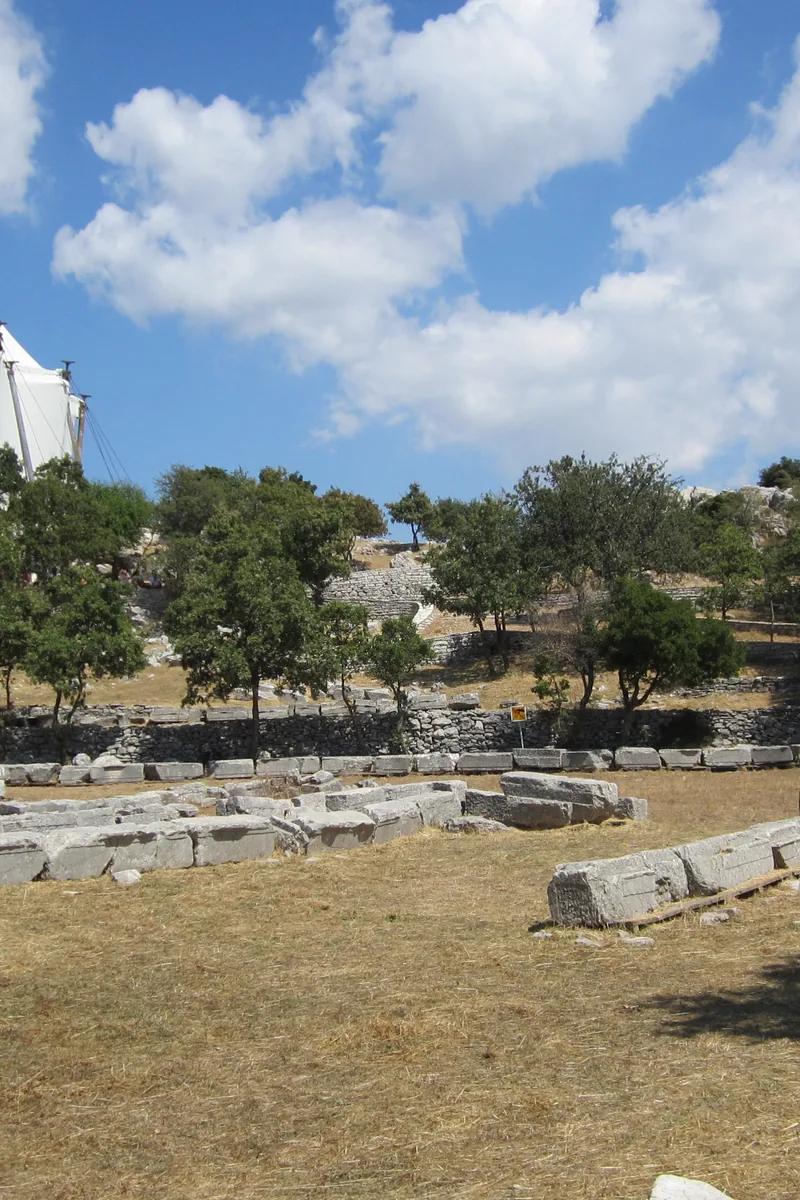
Because the temple sits so high and so exposed, and because its fine limestone had suffered from weather and earlier interventions, since the late 20th century it has stood beneath a great protective shelter while long-term conservation continues — so visitors today experience the temple within that tent, its columns rising inside the shelter as work goes on around them. Reaching Bassae is part of the experience: the site is remote, approached by a mountain drive through Andritsaina, with wide views over the Arcadian peaks. Entry is timed by the hour within a short daily window, so we handle the ticketing in your own language and hold the slot you want, letting you give your energy to the temple and its extraordinary setting rather than to the operator's portal.